Why Long-Form Strategy Games May Be Doing Your Brain More Good Than You Think
For years, gaming has been treated as the ultimate brain-rotting hobby. Too much screen time, too much sitting around, too much time staring at a virtual world.
But the science is getting a lot more interesting.
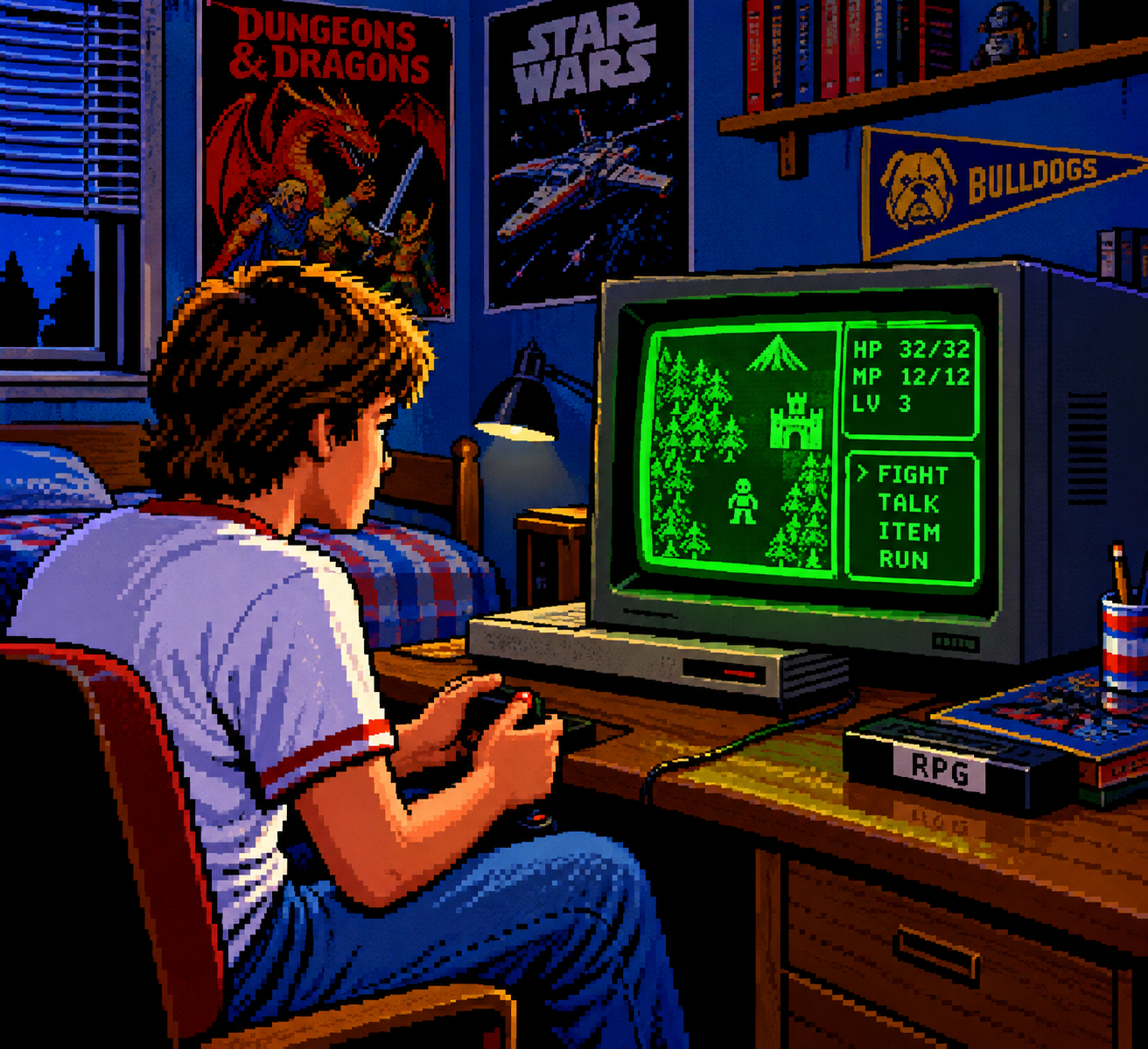
A growing body of research suggests that the right kind of video game can be a surprisingly demanding workout for the brain — especially games that make you think, plan, remember, adapt and solve problems over hours, days and even months.
Think long-form strategy games rather than games designed to be picked up and forgotten five minutes later. Games such as real-time strategy, complex simulations, open-world exploration and other games that force you to manage resources, remember information, monitor multiple things at once and make decisions with consequences.
The Research
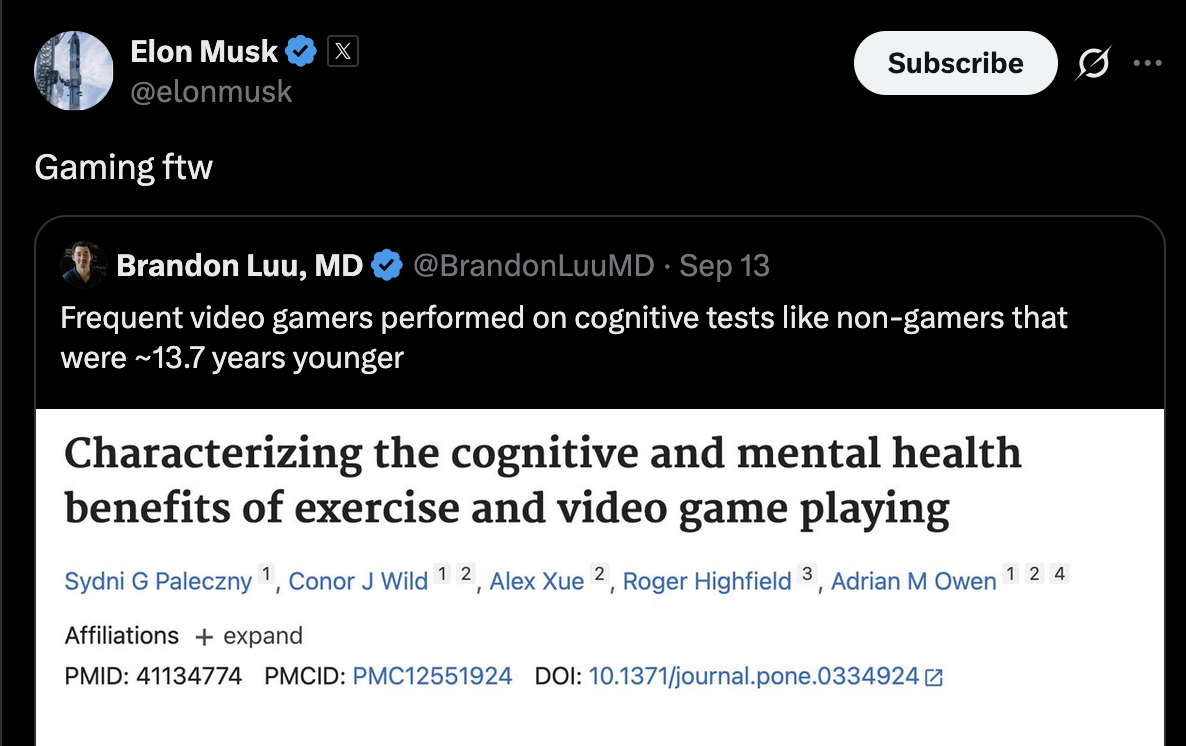
A major 2026 systematic review and meta-analysis looked at 133 studies involving more than 14,000 people. Across the research, video-game play was linked with better performance in several areas of cognition, including memory, spatial ability, visual attention, cognitive control and intelligence. The researchers described the overall effects as statistically significant, although generally small. Another study, published in PLOS ONE in 2025, looked at 923 adults and compared non-gamers with people who played games occasionally or regularly. The researchers found that more gaming was associated with better cognitive performance, particularly in areas such as short-term memory, reasoning and processing speed. It was a striking result: the frequent gamers performed better on the overall cognitive measure than the non-gamers.
And this is where things get particularly interesting for people who love big, complicated games.
Strategy games constantly ask your brain to juggle competing demands. You might be planning three moves ahead while watching an opponent, remembering where you placed resources, deciding whether to attack or defend, learning from a mistake and changing your plan — all at the same time.
Research on real-time strategy games has found that experienced players can show better visual attention and working-memory performance than non-players. Training studies using games such as StarCraft II have also reported improvements in perceptual and attentional abilities.
There is even evidence that immersive games can help memory. In a 2021 study, adults who played Minecraft for about 30 minutes a day over four weeks improved their performance on a memory task linked to the hippocampus, a brain region heavily involved in learning and memory.
That study is also where the headline-grabbing “13 years younger” figure comes from.
The researchers calculated that the improvement in memory performance was roughly equivalent to 13 years’ worth of the age-related decline they had previously measured. That does not mean the participants’ brains literally became 13 years younger, or that playing Minecraft reverses ageing. It means their performance improved by an amount comparable to what the researchers associated with 13 years of normal age-related decline.
There is an important lesson here. It probably isn’t simply a case of “more gaming = better brain”. In fact, a 2023 meta-analysis found that the labels “strategy”, “action”, “long-form” and “casual” on their own did not reliably predict cognitive benefits. What seemed more important was what the game actually required the player to do. Games involving multiple objectives, navigation, decision-making, attention and complex interactions can put much more demanding workloads on the brain.
So the interesting question isn’t whether gaming is good or bad. It is: what is the game making your brain do?
A three-hour session spent repeatedly tapping the same button is one thing. Spending three hours building an economy, learning a new system, managing an entire civilisation or figuring out how to survive in a complex world is something else entirely.
The emerging research suggests that when games are genuinely challenging, immersive and cognitively demanding, they may be more than entertainment. They can be a form of mental exercise — one that happens to be a lot more fun than filling out a brain-training worksheet.