Living Human Skin on a Robotic Finger
Researchers at the University of Tokyo, led by biohybrid engineer Shoji Takeuchi, have grown cultured living human skin directly onto a working robotic finger — not silicone or rubber, but real tissue. The result, a laboratory prototype published in Matter (9 June 2022), showed knuckle wrinkles forming as the finger bent.
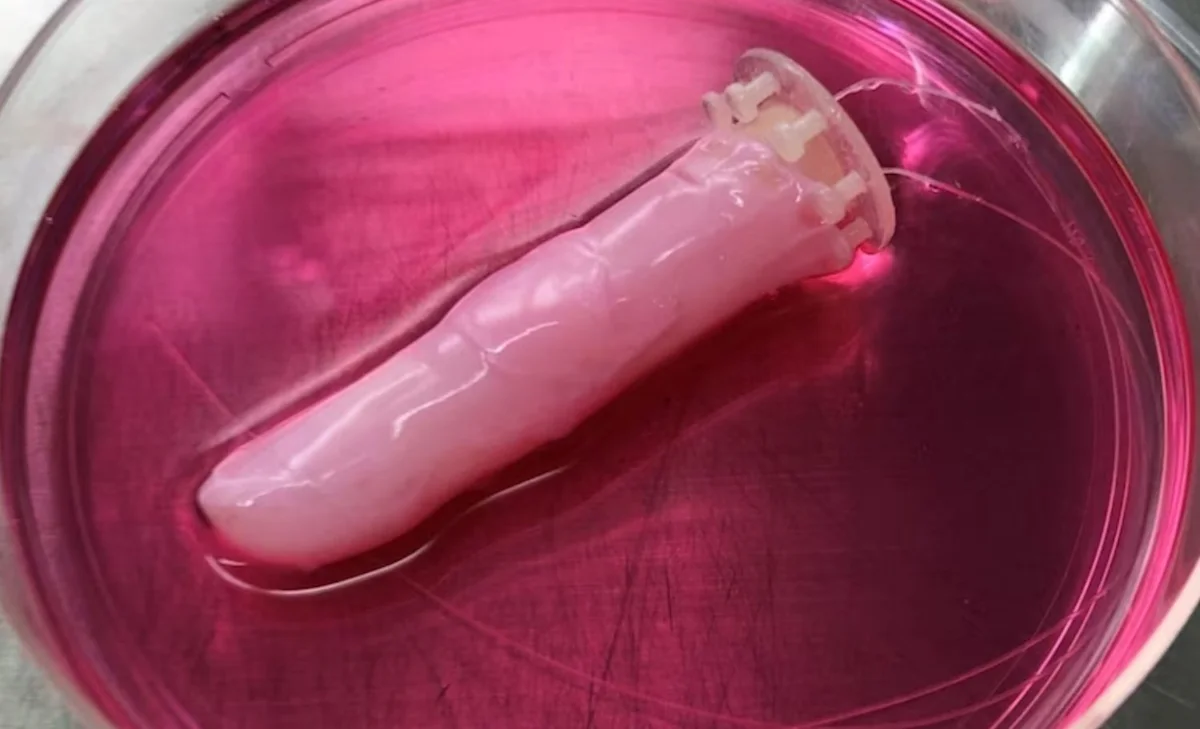
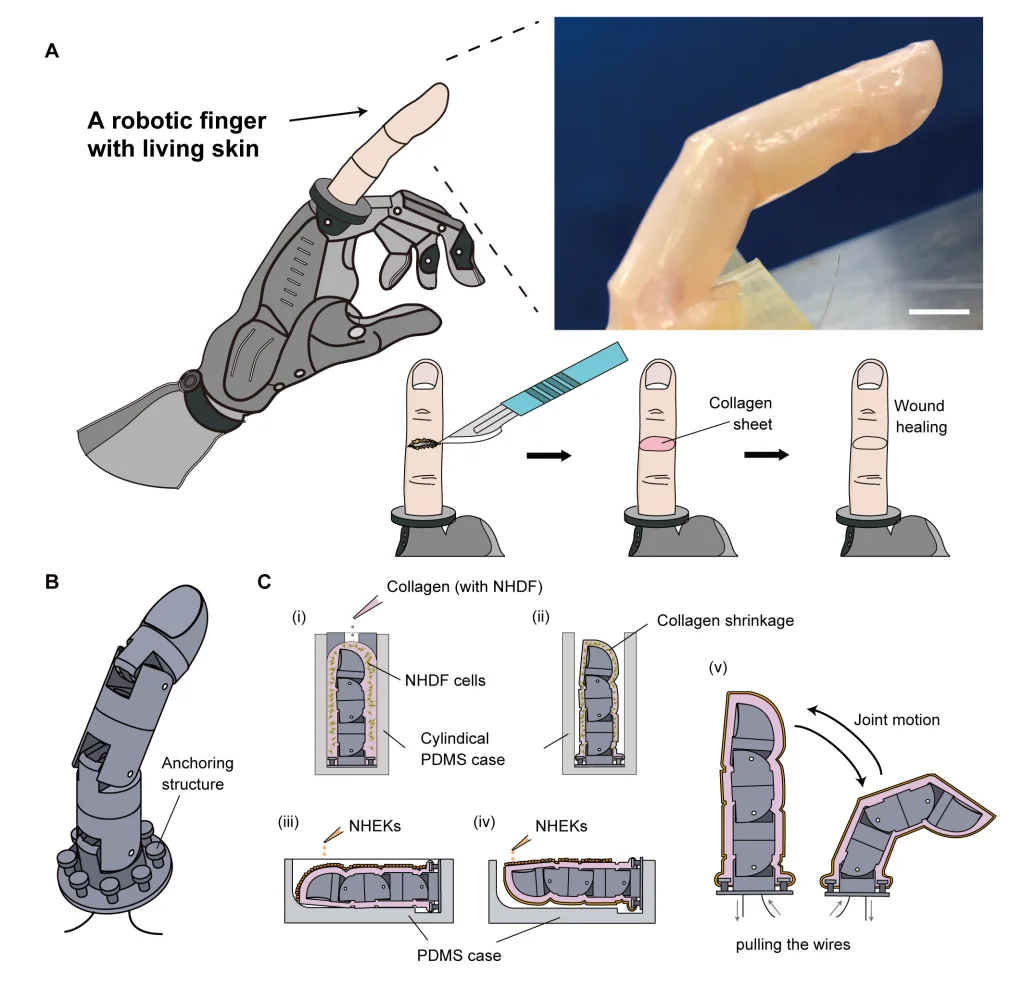
They immersed a three-joint finger in collagen and human dermal fibroblasts to form a dermis, then added keratinocytes for an epidermis. Grown in place, the covering fit without seams that would impede movement. Barrier properties were confirmed; both principal skin layers were present.
The skin stretched, wrinkled under mechanical stress, and could be repaired with help: after a cut, an acellular collagen sheet was grafted and fibroblasts integrated it over about seven days — assisted repair, not spontaneous healing. The work did not show sensation, immune function, or autonomous healing. Living cells need controlled moisture, nutrients, and conditions, so this is nowhere near a consumer product.
Unresolved problems include longevity, nutrient delivery or vascularization, attachment at larger scale, and survival outside culture. Possible long-term uses — humanoids, prosthetics, medical or cosmetic testing — remain distant.
— Source: University of Tokyo Grows Living Human Skin on a Robotic Finger (Rex Edison, Yahoo Tech, 28 Sep 2026)